
Bloodstained: Ritual of the Night (PC) Review
Igarashi sticks the landing with Castlevania’s spiritual successor!
~by tankMage (January 2026)
Score: 93/100 (Excellent)
Whenever I hear that an old school video game dev is planning to create their own franchise, I can’t help but think about the miserable failure that was Mighty No. 9 (which I’ll have to play someday) so I was a bit skeptical when Iga announced Bloodstained: Ritual of the Night last decade. Then I watched the promotional video for the project and I could tell Igarashi was fully committed to making something great. Looking back, Bloodstained surpassed expectations. Not only did Iga and his team create an excellent Metroidvania, they built an entire series from the ground up in a scant few years. This alone is an accomplishment in an era where once prestigious developers struggle to follow up with sequels to beloved franchises… I’m looking at you Rockstar and Bethesda!
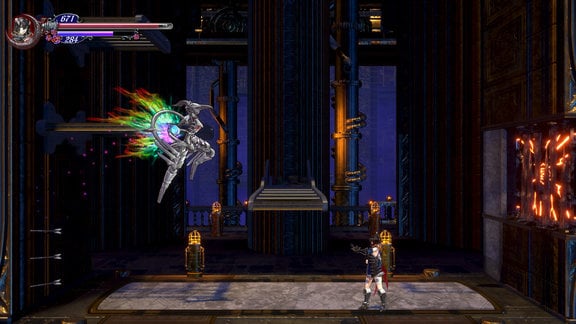
Getting back to Bloodstained: Ritual of the Night, I have to say this title is at the top of the list for anyone who loves the Metroidvania genre. Bloodstained doesn’t try anything new (aside from a crafting system that’s mostly OK) nor does it stray very far from the tried and true formula of its ancestor, but it does what it does with excellence and dramatic flare. Miriam’s ability to absorb powers from defeated demons is a lot like that of Soma Cruz from Dawn of Sorrow, but that’s OK, because the system is fun and it works. Most of the ideas and puzzles also hearken back to older games, so veterans of the old Metroidvania series will likely recognize a lot of the gimmicks. But that’s OK too, because Bloodstained isn’t the frenetic fever dream of a young game designer with big ideas as was the case with Castlevania: Symphony of the Night. Instead, Bloodstained is the tightly crafted passion project of someone who has mastered his trade.
While Igarashi and ArtPlay did a brilliant job, Bloodstained is not flawless. It seems that some of the bad habits Iga likely picked up during his time at Konami carried over into his second career as some of Bloodstained’s features feel more like busy work than gameplay. Miriam moves rather slowly, which is an issue when you have to run through a massive castle with hallways that seem to stretch into infinity. And the crafting system is extraneous if you ask me. If I didn’t know better, I’d think Iga was trying to make his game seem bigger that it really is, but he wouldn’t do that would he? Nah…
In spite of a few minor annoyances, this title really delivers. In fact, it goes above and beyond expectations with three playable characters, several difficulty modes, and a slew of bonus modes that are unlocked after beating the game. When I finished Miriam’s story I wanted to play again as a different character or try hard mode. Alas, my time is limited and other games call.
A new twist on an old story.
Fans of the Igarashi’s Castlevania games will recognize the formula used in Bloodstained almost immediately, though I won’t go into detail for the sake of avoiding spoilers. This is also the one criticism I have of the game and I wish he would have avoided the temptation to retread familiar plot points once again. That said, I also understand that those who crowd funded Bloodstained as well as potential customers wanted an Iga game… well they sure got one.
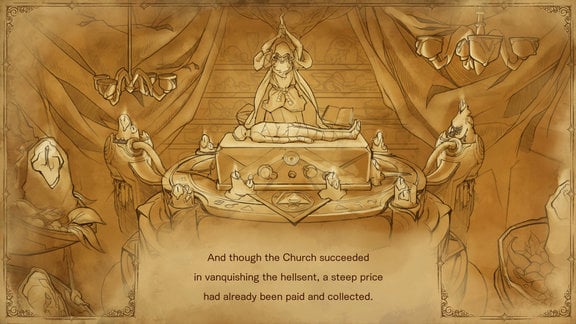
Outside of the plot being saddled with an old and overused device, I was really happy with the story overall. Miriam doesn’t have a lot of personality, but you kind of expect that from someone who has been asleep for years and what she does have in the way of character shines when it matters. The rest of the cast, from the mysterious Zangetsu to Dominique do a great job of pushing the story along.
I was also pleasantly surprised about how events unfolded as the game progressed. Speaking of events unfolding, it’s worth mentioning that Ritual of the Night has an entire back story that’s covered in a retro style platformer where the heroes battle a horde of demons unleashed by the Alchemist Guild. Even the reasons for the Guild’s actions are imaginative and interesting on a grand scale, so it’s great that Ritual of the Night wraps up the story arc with a more personal and dramatic tale.
A Visual Masterwork
Maybe I’m just old, but I’m rarely blown away by graphics these days. Of course, it’s also fair to say that it’s difficult to impress people in an era where a computer can generate any image imaginable so long as the artist operating it is skilled enough to bring it to fruition. Either way, Bloodstained features some truly impressive visuals that stuck with me days after playing it. The game starts off on a wrecked Galleon, then treats players to a battle with a humongous sea monster. It only gets better as Miriam explores the castle with its ornate baroque chambers and huge pillars. That said, some areas are more inspired than others and the game will ultimately take players through a few boring places, but I have to say 80% of the environments are some of the most beautiful places I’ve seen in any video game.
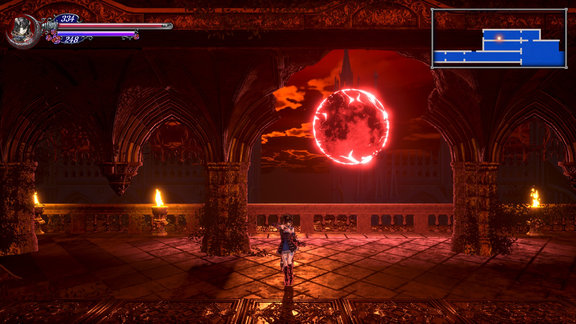
Spell and ability effects are equally impressive, but in more of a quantity over quality way. That’s not to say Miriam’s powers do not look nice, but there are probably a hundred of them (if not more) and you can tell ArtPlay had to cut some corners. For example, many abilities reuse monster skills or summon the monster they came from. That said, this kind of recycling is normal for Metroidvania. Plus, it makes sense that she would inherent the abilities of demons being a Shardbinder and all.
When it comes to the characters themselves, I’m not a big fan of the cell shaded anime style that was used. It’s not the style isn’t visually pleasing, but it managed to make otherwise creative character designs look generic. Maybe the real issue is modern anime tends to use a similar style, which is so common it’s become generic, but that’s off topic. Even in light of this problem, the heroes, monsters, and bosses all look great. The final boss is particularly cool so, I really can’t complain.
Miriam has a huge arsenal of weapons that really impressed me. Swords, whips, axes, boots for kickin’, and even guns make up her repertoire. Most weapons have unique sprites that Miriam shows off if you stand still after making an attack, just so you get the point hehe. While some of the designs are so fanciful they border on being ridiculous, they add a needed sense of whimsy to the mood of the game, which can often be very serious.
Speaking of whimsy, ArtPlay added portraits of their backers to Bloodstained. Players will run into them early on and see them throughout the castle. It was a cool touch and the backers sent in great images. I’ve seen people complain about some of the sillier pictures online, but they didn’t bother me. If anything, they fit perfectly into a Metroidvania seeing as how Igarashi’s games almost always include a few gags. Additionally, the more serious portraits look great, so I think it was a nice touch.
It’s Metroidvania alright!
I’m pretty sure I’ve played through all of the Igarashi Castlevania titles at this point (even the ones on PlayStation 2) and I’m very familiar with the way they were structured, including their quirks. Bloodstained: Ritual of the Night features everything that made the Metroidvania games great and then some. In many ways, this is a good thing, but it also means there are many (and I mean MANY) callbacks to previous titles. For example, Miriam will need to find things like double jump and obtain a variety of other powers from bosses in order to progress through the game. Exploration is also very important like any other game in this genre.
While Bloodstained is exactly what I wanted it to be, it’s important to understand that it seeks to perfect an old design rather than reinvent the wheel. Consequently, fans looking for a completely new take on Metroidvania may be a bit disappointed. That said, Bloodstained is novel enough to be entertaining.
The castle is huge and full of diverse areas to explore. While some sections are fairly standard cathedral and entry hall type places, there are also a few original environments like the Underground Desert.
Most of the puzzles are pretty good and some of them are even fresh takes on old gimmicks. As I said earlier, Miriam will need some cliche abilities like double jump, but some of the barriers to progress have some pretty creative solutions. Without spoiling too much, I’ll say that she finds an interesting way to move objects that I don’t recall seeing in other Iga titles.
One of Bloodstained’s greatest strengths is the fact that it sought to bring more challenge to the table than what its source material had to offer…with the exception of Ecclesia. I ended up grinding a lot and was about level 56 when I beat the game. While she didn’t have much in the way of super weapons, Miriam was more powerful than she would have been had I just run through the game. Even so, I didn’t feel like I was blowing enemies away like I did playing most of the other Metroidvanias. With this in mind, I’m excited try to hard mode someday, because it may actually require skill and strategy to conquer.
More padding than Dominique’s bra!
A short while ago I played Lament of Innocence (another of Igarashi’s Castlevania titles) and noted that the game had a lot of very long, very empty hallways that seemed like they were there to make the game take more time to complete. It was kind of startling, because I didn’t feel that most of the games he directed were designed to be superficially long. I won’t say Bloodstained is as guilty of padding play time as Lament was, but there are a few things that make me raise an eyebrow.
For starters, Miriam seems to run kind of slowly. To be fair, none of the Metroidvania protagonists were all that fleet footed (though there are exceptions) but they didn’t feel sluggish. Miriam kind of does though. On top of that, most rooms are huge and it feels like it takes here forever to cross a hallway.
ArtPlay also added a crafting system, which I’m not a fan of. In most Metroidvania games, weapons and armor are found hidden away or are dropped by monsters. In Bloodstained, players will find plenty of gear, but the best stuff must be crafted. Instead of just getting a drop or finding a chest, players have to buy or gather materials, then craft them into an item. Some crafting recipes are multi-step processes which are kind of annoying to make. Overall, the system feels like another hoop to jump through rather than a meaningful gameplay mechanic.
To be fair, I actually like the cooking and shard upgrade aspects of crafting, but neither of these felt like they were designed to waste time.
Unity
Like just about everything, Bloodstained was made using the Unity engine. I understand that it’s very time consuming to make a game engine and nearly impossible for a dev to do so if they want a modern looking game, but the ubiquity of Unity makes everything made on it feel the same no matter how good the devs are at customizing it. Consequently, Bloodstained has wet, shiny graphics like just about every title made with Unity. The physics also have that Unity feel. It’s hard to explain, but you just kind of know how characters and objects move in this engine. It’s not necessarily a bad thing, but it certainly makes an otherwise exceptional game feel a bit like everything else.
A User Friendly User Interface
The UI and controls at both excellent. Controlling Miriam feels smooth and natural. The menus are designed nicely as well. But the best feature of Bloodstained’s UI is the shortcut system, which allows Miriam to change spells and equipment instantly. Not only does it make switching between skills you need to use for exploring and those needed for combat a lot less painful than it is in other Metroidvania style games, it also allows for creative meta-gaming since you can fire off an attack, then immediately switch to something else. Better yet, you can name your shortcuts. I just wish they started giving players extra shortcuts sooner than they do.
Excellent voice acting and even better music!
I want to talk about the soundtrack first, because it’s one of the best ones I’ve heard in a game made after the 2000s. Just about every track is great and the music made me excited to explore the castle. Michiru Yamane is probably better known for her work on Castlevania: Symphony of the Night nearly 30 years ago, but I have to say that she has outdone herself, which is really amazing considering the quality of her older work. It also disproves the argument that video game music has to be bland in order not to drown out the voice actors.
Speaking of voice acting, the actors did a great job and Iga managed to get the legendary David Hayter (who voices Snake in Metal Gear) to play a major role.

Final Thoughts
Bloodstained: Ritual of the Night may not bring much of anything new to the table, but that’s fine; It does what it was made to do masterfully. It’s impressive that ArtPlay was able to get such an excellent game off the ground for their debut, but I suppose it shouldn’t be a surprise considering that Igarashi is an industry veteran. I’ve supported a few early access/crowd funded games over the years and have been burned, which is quite disappointing, but games like Bloodstained prove that their are talented, trustworthy developers out there who deserve a chance.
If you like Metroidvania style games or want to try them, Bloodstained: Ritual of the Night is an excellent choice. It’s not quite perfect, but it’s close enough that it surpasses some of the genre’s classics.
Thanks for reading my review for Bloodstained: Ritual of the Night!
RetroMaggedon.com ©2026